Amboseli is one of the more sensible starting points for a family safari in Kenya. The park sits close enough to Nairobi that overland travel is realistic, wildlife is often visible without demanding long tracking hours, and the open landscape is easy for children to read. That combination matters more than most planning guides acknowledge.
The success of an Amboseli family trip, though, has less to do with the park itself and more to do with decisions made before arrival: where to stay, how long to go, how much downtime to protect, and how honestly you have assessed your children’s drive tolerance.
This guide covers all of it.
Why Amboseli Works for Families
Not every park in Kenya is a natural fit for children. Some require very long game drives before wildlife appears. Others are logistically complex. Amboseli removes many of those friction points.
The park offers:
- Elephant sightings that are often strong and repeatable without extreme effort
- Open savannah terrain that gives children clear sightlines and readable sightings
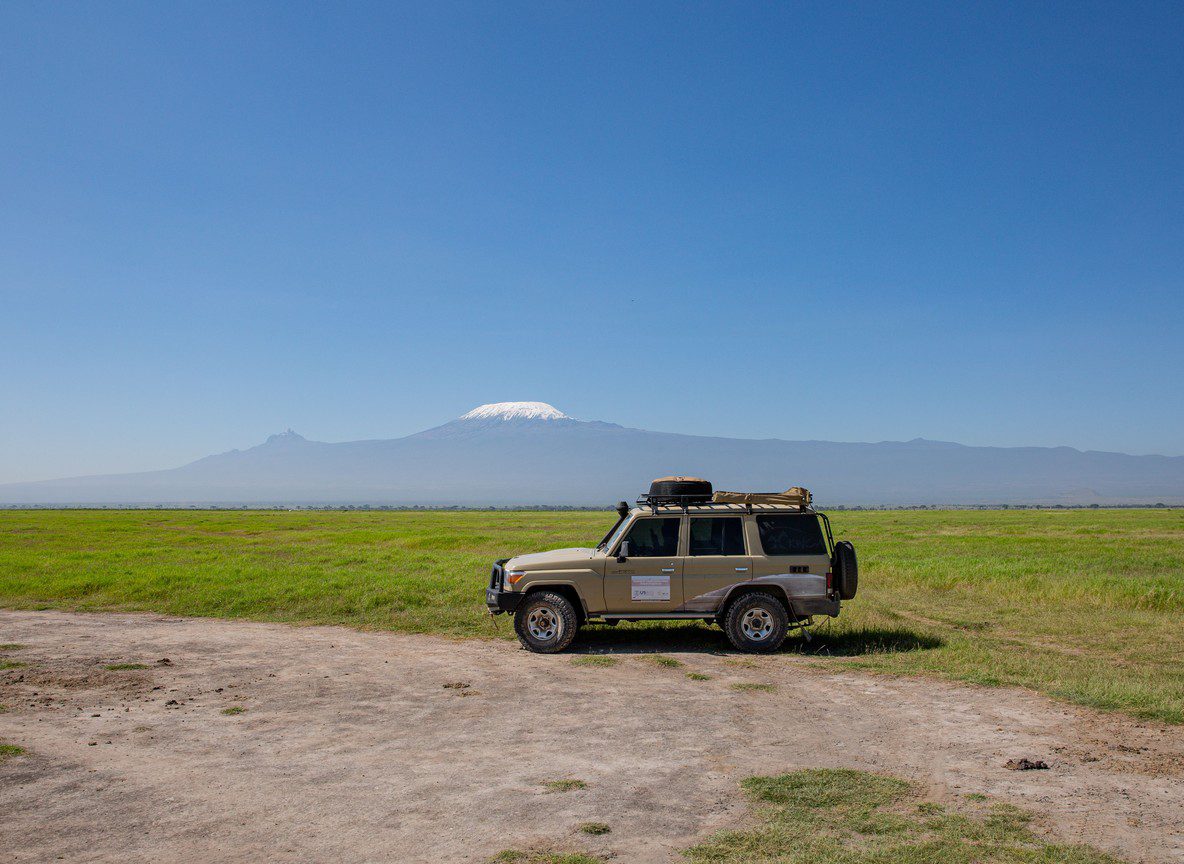
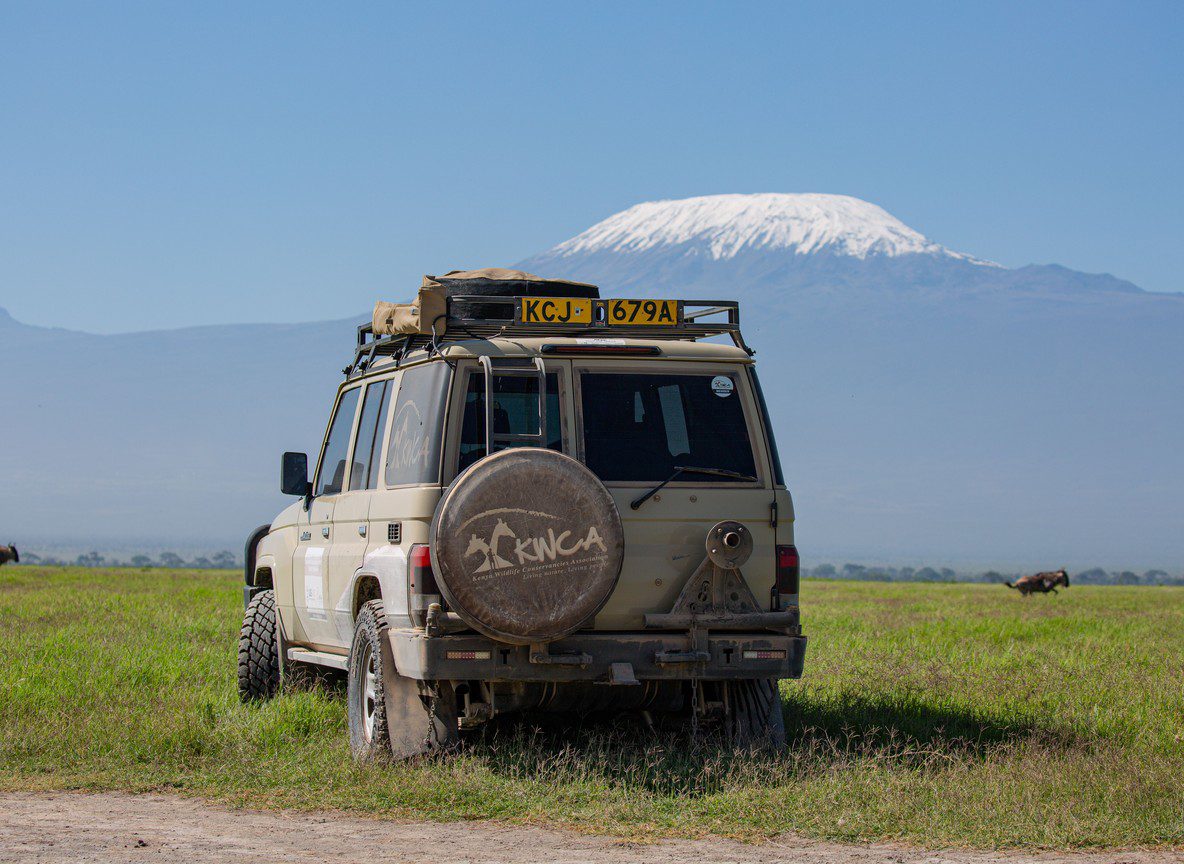
- Kilimanjaro in the background, which gives kids an immediate visual anchor
- A compact enough circuit to work on shorter itineraries
- Road access from Nairobi that is realistic without being exhausting
None of that guarantees a great family trip. But it creates conditions where one is much more possible than in more complex ecosystems.
The Right Trip Length for Children
Two nights is the minimum that lets a family settle into the rhythm. Three nights is the sweet spot for most families. Beyond that, you are extending because your children genuinely enjoy the pattern, not because the park requires it.
With two nights:
- One proper early drive, one afternoon drive, and a full day in the middle to pace well
- Less time pressure on each drive
- Children still feeling the novelty without fatigue hitting by day two
With three nights:
- More space to rest between drives
- Room for a quiet afternoon with no agenda
- Better odds of catching the mountain clear on at least one morning
Unless your children already have safari experience and genuinely handle early starts well, keep the Amboseli component to two or three nights and protect the rest time.
Choosing the Right Family Accommodation
This is the single most important planning decision. The park experience is largely determined by how well-rested your children are between drives, and that comes down to the property.
What family accommodation needs to solve:
- Room configuration that separates sleeping spaces (interconnecting rooms, not just a double with a rollout)
- Meal flexibility that matches actual family eating times
- Enough indoor and outdoor space that children can decompress without disrupting other guests
- A location that does not require long internal transfers before each game drive
Amboseli Serena Safari Lodge is one of the properties with a genuinely designed family room setup: an interconnecting configuration with a king bedroom, a twin room, a shared bathroom, and a private balcony. That kind of setup makes a material difference when you are managing young children’s sleep schedules in a lodge environment.
Kibo Safari Camp also offers family accommodation, with a slightly different feel. It tends toward a more relaxed camp atmosphere, which some families find easier.
A generic “family-friendly” label from a camp website is not the same as a room that actually works. Ask specifically about the interconnecting configuration before you book.
Inside the Park vs. Outside the Park
Both work. The question is which trade-off matters more for your family.
Inside or near-gate properties:
- Reduce dead driving time to wildlife zones
- Make early starts less disruptive because you are already close
- Generally more efficient for families with younger children who get restless in vehicles
Conservancy or outside-park stays:
- More space within the property, which helps with restless children at midday
- Sometimes quieter and less trafficked
- Can offer activities not permitted inside the national park
If your children are under eight and struggle with long vehicle time, faster access to wildlife usually outweighs the space benefits of an outside-park property. For older children who handle a vehicle better, a conservancy stay can add variety.
Driving vs. Flying With Kids
The road from Nairobi takes roughly four to five hours in good conditions. That is manageable for many families, but it is a real commitment, especially at the start of a trip when children are still adjusting to the time zone or excited and restless.
Road travel makes sense when:
- Your children handle long car journeys without serious complaint
- Luggage volume makes flying inconvenient or expensive
- Budget is a significant constraint
Flying makes sense when:
- Transit fatigue is a real concern, especially with children under six
- You are connecting from another park and want a clean, short transfer
- The trip is already long and you want to preserve energy for the drives
The Kilimanjaro International Airport on the Tanzanian side and Wilson Airport in Nairobi both offer options for accessing Amboseli. The fastest route in is usually a light aircraft from Wilson to Amboseli airstrip, which cuts transit to under an hour. It costs more. For families where energy management matters, that cost often pays for itself.
What Wildlife Children Respond To
Children do not experience wildlife the way adult photographers do. They do not wait patiently for the best light. They want things to happen, and they want those things to be large, close, and easy to understand.
Amboseli gives families those moments more reliably than most parks because:
- Elephant herds are often large and close
- Giraffe and zebra are consistently visible in open terrain
- Buffalo appear in readable situations without needing specialist tracking
- The landscape itself is dramatic enough to hold attention between sightings
Big cat sightings do happen in Amboseli, but they are not as consistent as in the Maasai Mara. Do not build a child’s expectations around cheetah or lion. Build them around elephants and surprise. That framing means the safari delivers rather than disappoints.
Pacing Game Drives for Kids
The standard two-drive structure works well for families when you actually protect the midday gap.
A rhythm that holds for most families:
- Early drive departing around 6:30am, back by 9:30 or 10am
- Proper breakfast, then genuine rest time until 3:30 or 4pm
- Afternoon drive, back before dark
The failure mode is filling the gap with activities, snacks, and planning for tomorrow’s drive. Children need genuine downtime to reset. If that gap gets busy, by day two you will have tired, resistant children who no longer want to be in a vehicle at 6am.
One drive per day is also a valid family strategy, especially on the first or last day of a stay. Do not feel compelled to run two full drives every day. Quality over volume produces a better overall experience.
Packing for Children
Keep it simple. Children on safari need practical layers, not a curated wardrobe.
What to pack for children:
- Light, neutral-coloured long-sleeve tops for morning drives (it is colder than expected)
- One proper warm layer (a fleece or light jacket)
- A hat that stays on in a moving vehicle
- Closed-toe shoes with grip
- Extra socks (always more than you think)
- Binoculars at an appropriate magnification (8x is enough for a child)
- A small water bottle for the vehicle
- A quiet activity for breaks
Pack bright colours for the lodges. Pack neutrals for the vehicles. Children who are warm and comfortable on drives complain far less than children who are cold.
Meals and the In-Between Hours
The hours between game drives often determine how well the overall safari goes. A lodge that handles family mealtimes well is not a luxury. It is part of the core product.
Questions to ask any property before booking:
- What time is breakfast served, and can it be adjusted for early departures?
- Are children’s meals available, or is it a set adult menu?
- Is there outdoor space where children can move around between drives?
- Is the pool or garden accessible without crossing guest areas?
Young children do not need entertainment programmes. They need space to run, shade to rest in, and adults who are not stressed about them disturbing other guests. A well-designed lodge removes that friction before it becomes a problem.
Amboseli for Different Ages
For children under five, Amboseli is manageable but requires realistic planning. The drives themselves work best when they stay under two hours, the accommodation provides sleeping flexibility, and at least one adult is prepared to skip a drive and stay at the lodge.
For children between five and ten, Amboseli is genuinely enjoyable. Elephant proximity delights this age group reliably, and the open terrain means they can follow the action without needing binoculars or specialist spotting skills.
For teenagers, Amboseli works well when it is not presented as “everyone stares at the bush.” Teenagers respond to context: who are these elephants, why are the tusks that long, what is happening in that family herd. A knowledgeable guide who treats teenagers as curious people rather than tag-alongs produces a completely different experience.
When to Go With Kids
June through October gives the most reliable weather and wildlife visibility for a first Amboseli family trip. Mornings are often clear enough for mountain views, the grass is shorter after the long rains, and roads are generally in better condition.
The short rains in November and the long rains from March to May create muddier conditions and some road access challenges. Wildlife is still present, but drives can be less efficient. Green-season travel works for families who want lower prices and fewer vehicles, provided the adults are comfortable with less predictable road conditions.
January and February are a solid shoulder window: drier than the long rains, lower pressure than peak season, and often good for mountain visibility in the mornings.
A Simple Planning Rule
Keep it short, keep it restful, choose accommodation carefully.
If you do those three things, Amboseli consistently delivers for families. The elephants are that good. The scenery is that readable. The park does not require long hours or specialist knowledge to produce memorable moments.
Where families go wrong is building the same itinerary structure they would plan for adults without children: two long drives daily, five nights, packed schedule. That structure breaks down within 48 hours. A more modest plan that actually works beats an ambitious one that falls apart.
Planning Your Amboseli Family Safari: Next Steps
If you are in early planning mode, start with trip length and accommodation configuration. Those two decisions shape everything else.
For broader context on Amboseli, the Kenya Wildlife Service maintains updated information on the national park at kws.go.ke.
For family-specific itinerary questions, thinking through the right lodge for your children’s ages, or working out whether to drive or fly, the planning conversations worth having are the ones that get specific about your family’s actual tolerances rather than general advice about what “families” do.
More Amboseli planning resources are available at trunktrailssafaris.com.
Turn this reading into a real itinerary with help from a Kenya-based safari team.
Start Planning Your Safari